How Often to Water Grass for a Greener Lawn
You stand in the yard, look at the sprinkler, and still don’t know if you should run it today. That’s where most homeowners get stuck. The lawn looks a little off, the weather changed, and every watering guide seems to give the same answer without telling you how to use it in your yard.
The good news is that lawn watering doesn’t have to stay a guessing game. Once you know how much water your sprinkler puts down, how your soil handles that water, and what your grass looks like when it’s happy or stressed, the schedule gets a lot simpler.
A green lawn usually comes from a boring routine done well. Not from watering every day. Not from blasting the yard whenever it looks dry at the surface. The key is learning how often to water grass based on outcome, not habit.
In This Guide
- Why "How Often to Water Grass" Is the Wrong Question
- The Golden Rule of Lawn Watering
- How to Measure Your Sprinkler's Water Output
- Reading the Signs Your Lawn is Thirsty or Drowning
- Adjusting Your Watering Schedule by Season
- Your Simple Lawn Watering Action Plan
Why "How Often to Water Grass" Is the Wrong Question
The wrong question is frequently asked first. It is, “How often should I water?” when the better question is, “How do I get enough water into the root zone without wasting it?”
That sounds like a small shift, but it changes everything. If you focus only on frequency, you end up copying someone else’s schedule. If you focus on the result, you start watering based on your grass, your soil, and your sprinkler.
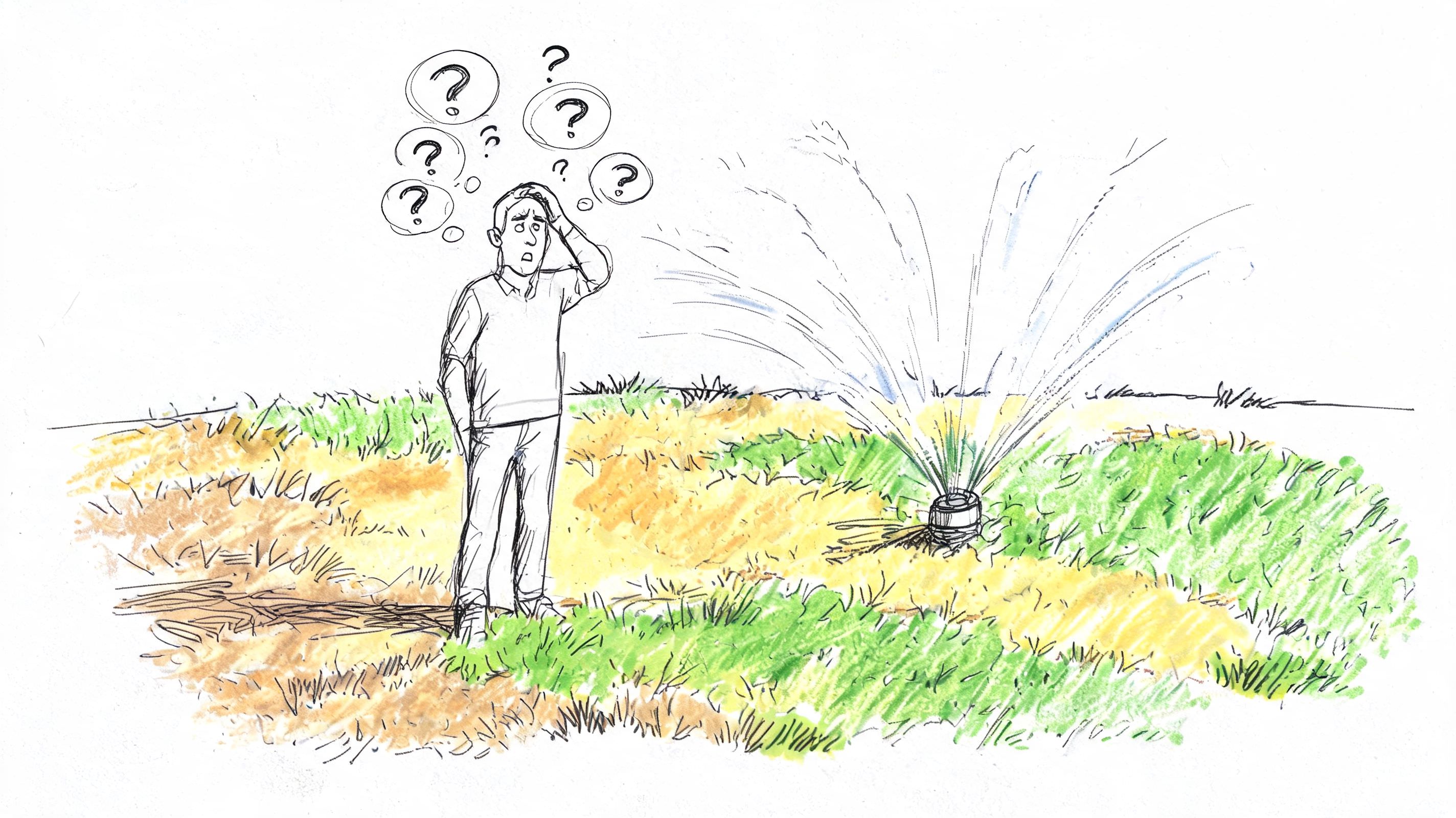
Watering a lawn uses a meaningful share of household water. The average American family of four uses 400 gallons of water daily, and about 30 percent goes to outdoor use. Over half of that outdoor water goes to lawns and gardens, according to this outdoor residential water use fact sheet.
Practical rule: A good watering schedule should do two things at once. Keep grass healthy and keep waste down.
A lawn doesn’t care whether the timer says Tuesday and Friday. It cares whether moisture reaches the roots, whether the soil can absorb it, and whether you keep doing that consistently.
Here’s what usually doesn’t work:
- Watering by habit: Running sprinklers every day because that’s what the old owner did.
- Watering by surface appearance: Seeing dry-looking soil on top and assuming the whole root zone is dry.
- Watering too long in one shot: Letting water run until it starts heading toward the sidewalk or gutter.
The better approach is simple. Set a weekly target. Measure your sprinkler output. Watch how your soil absorbs water. Then adjust. Once you do that, “how often to water grass” stops being confusing and starts becoming routine.
The Golden Rule of Lawn Watering
The baseline rule is straightforward. Most lawns need about 1 to 1.5 inches of water per week, including rainfall, during active growth, according to this lawn watering guideline.
That number gives you a target, not a timer setting. It tells you how much water the lawn needs over the week. It does not tell you how many minutes your sprinkler should run, because every sprinkler system puts out water at a different rate.
Total water matters more than calendar frequency
If rain gave your lawn part of that weekly amount, your sprinkler only needs to make up the difference. That’s where many homeowners overdo it. They get a good rain and still run the system on schedule.
The rule also changes a bit by grass type. Cool-season grasses like Kentucky bluegrass and fescue need about 20% more total water than warm-season grasses. So if you’re growing cool-season turf, don’t copy a warm-season schedule and expect the same result.
A practical way to approach this:
| Grass type | General weekly need |
|---|---|
| Warm-season grass | Usually fits near the lower end of the weekly range |
| Cool-season grass | Usually needs more within that range because total demand is higher |
What this looks like in the yard
If your lawn is actively growing, start with the weekly target and then divide it based on how your soil handles water.
A lot of homeowners get into trouble because they think “more often” means “better.” It usually doesn’t. Grass responds better when the soil gets watered sufficiently that roots have a reason to grow down, not stay near the surface.
The target is weekly water applied well, not random watering events spread across the week.
One practical example helps. Say your area gets steady rainfall early in the week. Don’t ignore that. Count it toward your total, then water only enough to close the gap.
Here’s the mindset I recommend:
- Track the weekly total: Include rain.
- Match the target to your grass type: Cool-season lawns usually need more than warm-season lawns.
- Don’t lock yourself into a rigid number of watering days: The right schedule depends on how fast your soil absorbs water and how fast the lawn uses it.
Once you know the weekly target, the next job is turning that target into actual sprinkler runtime. That’s the part most guides skip, and it’s the part that makes watering finally click.
How to Measure Your Sprinkler's Water Output
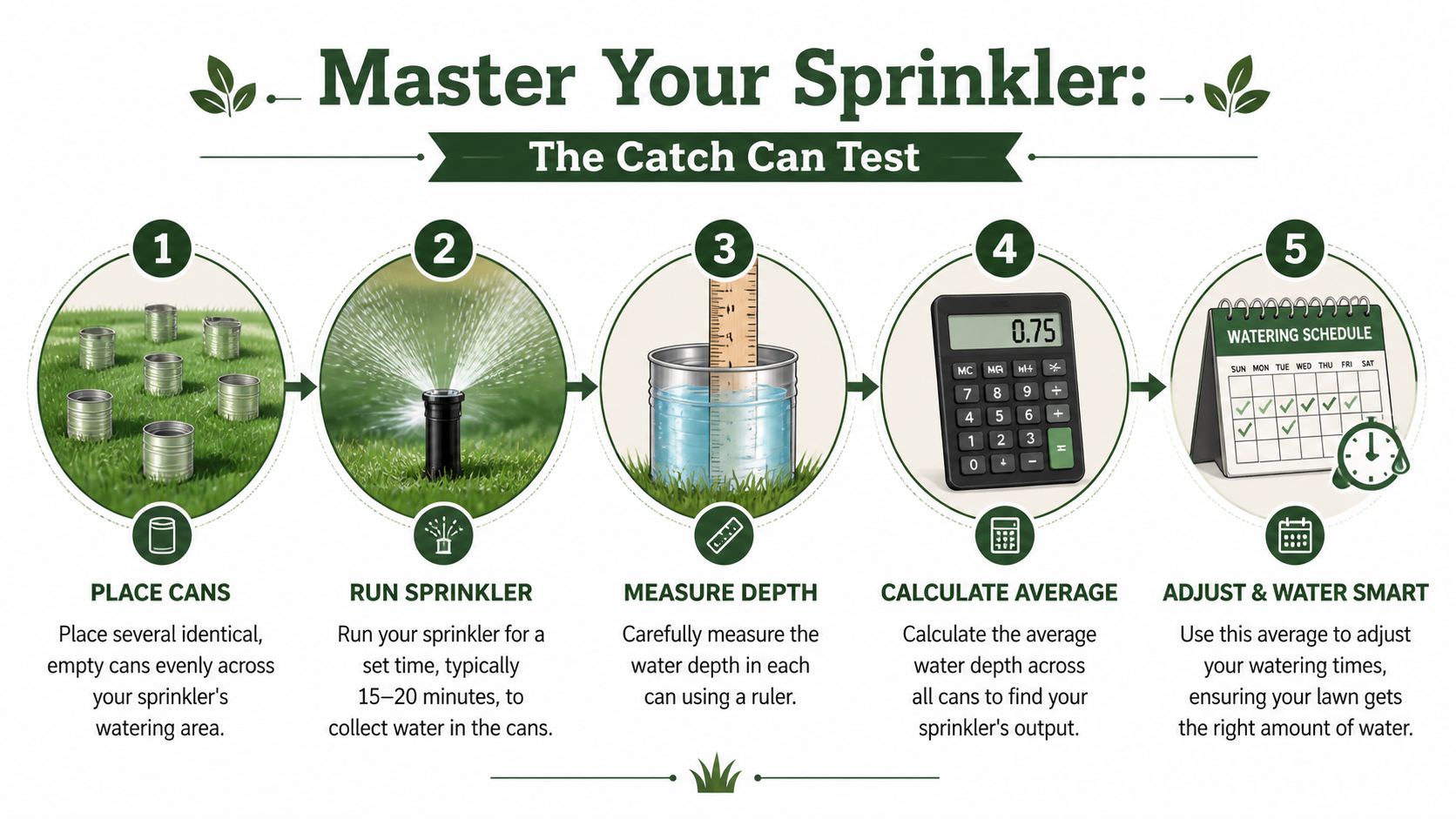
A lawn can’t use a rule like “1 inch per week” unless you know what your sprinkler puts down. A simple catch-can test changes everything.
You don’t need special gear. A few identical shallow cans work. The point is to measure what your sprinkler really delivers, not what you assume it delivers.
Use the tuna can test
Set several empty cans around the area that one sprinkler zone covers. Spread them out so you can see whether water is landing evenly across the zone.
Then do this:
- Place the cans evenly: Put them in dry spots, green spots, near heads, and farther away from heads.
- Run the zone for a set time: Keep it simple and use the same time for the whole test.
- Measure the water depth: Use a ruler and check each can.
- Average the readings: That average tells you how much water that zone applied during the test.
- Convert that into runtime: If the cans collect about half an inch in the test run, you now know how long it takes to deliver a full inch.
Example. If your cans collect a half-inch of water in 20 minutes, that zone needs 40 minutes to apply 1 inch. That gives you a real timer setting instead of a guess.
This test also shows whether one part of the lawn is getting far more water than another. If one can is full and another is barely wet, the problem may not be schedule alone. It may be uneven coverage.
Check that the water is going deep enough
Watering the surface isn’t the goal. You want moisture moving down into the soil where roots can use it.
After watering, take a screwdriver and push it into the soil. If it slides in easily several inches, the water went down. If it stops quickly in hard, dry ground, the run time may be too short or the water may be running off before it soaks in.
Deep, infrequent watering pays off. It can produce deeper roots, up to 2x length, reduce thatch by 20-30%, and improve drought tolerance. A University of Maryland study found amply watered plots used less than 50% of the water used by lightly and frequently watered plots while still maintaining quality, as reported in this summary of deep lawn watering results.
A shallow daily sprinkle trains grass to live near the surface. A deeper soak trains it to chase water lower in the soil.
A simple example you can copy
Use one zone and one weekly target.
- Weekly target: 1 inch
- Your test result: 1/2 inch in 20 minutes
- Needed runtime for 1 inch: 40 minutes total for the week
Now decide whether your soil can take that in one run. If not, split it up. Maybe two shorter runs on the same morning with a pause between them. Maybe separate watering days. The math stays the same. The delivery method changes based on soil absorption.
That’s how you stop guessing. You measure output once, then you make every watering decision from real information.
Reading the Signs Your Lawn is Thirsty or Drowning
A lawn talks back if you pay attention. You can usually tell when it needs water and when it’s getting too much. The trick is learning the difference, because thirsty grass and overwatered grass can both look “off” at first glance.
What thirsty grass looks like
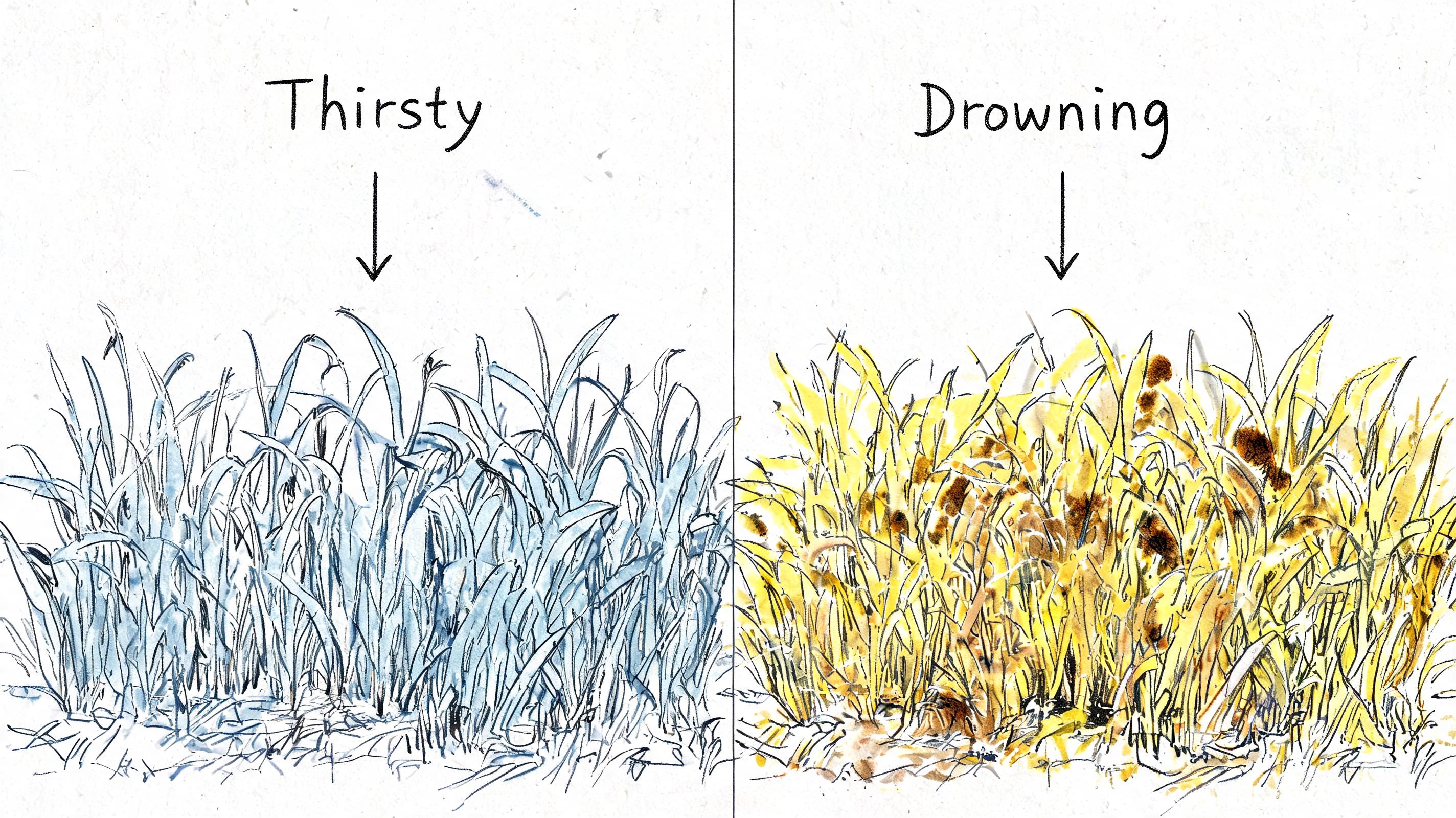
When grass needs water, it usually loses that springy look. It may take on a dull or blue-gray cast, and footprints can linger instead of bouncing back.
Those are the signs I trust more than a dry-looking top layer. Surface dryness doesn’t always mean the root zone is dry. But wilted color and lingering footprints usually mean the lawn is running short on available moisture.
A thirsty lawn often shows:
- Bluish or gray-green color: The healthy shine fades.
- Footprints that stay visible: Blades aren’t recovering quickly.
- Less rebound after mowing: The turf looks tired instead of upright.
What overwatered grass looks like
Too much water creates a different set of problems. The lawn may feel soft or spongy underfoot, and growth often gets messy. You may also notice more weeds or disease pressure.
Overwatering is common because people think more water equals a greener lawn. In reality, a lawn that stays wet too often struggles to breathe at the root level and tends to weaken over time.
Watch for these clues:
- Spongy turf: The ground feels soft instead of firm.
- Water sitting or moving off the lawn: That’s wasted irrigation.
- Patchy decline despite frequent watering: More water isn’t fixing the problem because excess water is the problem.
If water is leaving the lawn before soaking in, the issue isn’t thirst. It’s poor timing or poor cycle length.
Why soil type changes the schedule
The usual lawn advice proves inadequate because the right frequency depends on your grass, your weekly water need, and how long your soil can absorb water before runoff starts, as explained in this guide to cycle and soak lawn irrigation.
That means two homeowners can need very different schedules even if they live close to each other.
| Soil condition | Better approach |
|---|---|
| Heavy clay or sloped yard | Use shorter watering cycles, then let the soil soak before the next cycle |
| Sandy loam | A longer single watering may work because water moves in faster |
A homeowner with heavy clay soil on a slope may need 3-4 shorter cycles to prevent runoff. Another with sandy loam might safely water once weekly. That’s why soil test information matters. If you know whether your soil is sandy, loamy, or clay-heavy, you already have a big piece of the watering puzzle.
If your lawn always seems dry even though you water often, check whether the water is penetrating. If your lawn stays soggy, check whether your schedule is outrunning your soil’s ability to absorb water.
Adjusting Your Watering Schedule by Season
A lawn that needed water twice last week might need none this week. That is normal. Rain, temperature, wind, and growth rate all shift through the season, so the schedule has to shift too.
Keep the timing simple. Water early in the morning so more of it reaches the root zone and the grass does not stay wet overnight. Then change the amount and frequency based on the season, your soil, and what the lawn is showing you.
What to do in spring and summer
Spring is where a lot of homeowners start the sprinklers too soon. The grass greens up, the timer gets turned on, and the yard ends up wetter than it needs to be. Check rainfall first. Then use the screwdriver test or a quick look at your tuna can totals before adding more water.
In many yards, spring watering is lighter and less frequent than people expect. Growth is active, but cooler weather and periodic rain often cover part of the need. If your soil stays damp a few inches down, wait.
Summer takes more attention. Heat, longer days, and dry wind pull water out of the lawn faster. That does not mean daily sprinkling. It means making sure your weekly total is getting into the soil sufficiently, then splitting that total into cycles your yard can absorb.
A practical seasonal pattern looks like this:
- Spring: Start slow. Let rainfall do its share, and do not water on autopilot.
- Early summer: Recheck sprinkler output and watch how fast the soil dries between runs.
- Peak summer: Increase total watering if the lawn shows stress, but keep the soak deep rather than frequent and shallow.
- Hot spells: Stay with the same measured approach. Add water if needed, but do not panic and start misting the lawn every day.
What to do in fall and around fertilizer
Fall usually means backing off from peak summer watering, not shutting the system down. Cool-season lawns often grow strongly in fall, so they still need steady moisture if rain is light. Warm-season lawns slow down sooner, which usually means longer gaps between waterings.
This is also the time to connect watering to the rest of your lawn plan in a practical way. If you apply fertilizer, water it in enough to move it off the blades and into the soil. Do not soak the lawn so heavily that nutrients move past the root zone. The right amount depends on your soil. Sandy soil drains faster. Clay holds water longer and may need shorter runs.
That same logic helps if you use MySoilPlan or already know your soil type. A clay-heavy yard in fall may still need short cycle-and-soak sessions. A loam soil may handle a longer run with no trouble. A sandy lawn may need water a bit more often, even as temperatures cool, because it does not hold moisture as long.
Use the season to fine-tune, not to guess. Measure output with the tuna can, check penetration with the screwdriver, and let your soil type decide how the weekly total gets applied.
Your Simple Lawn Watering Action Plan
A good lawn watering routine isn’t complicated once you strip out the guesswork. Keep it to a repeatable loop.
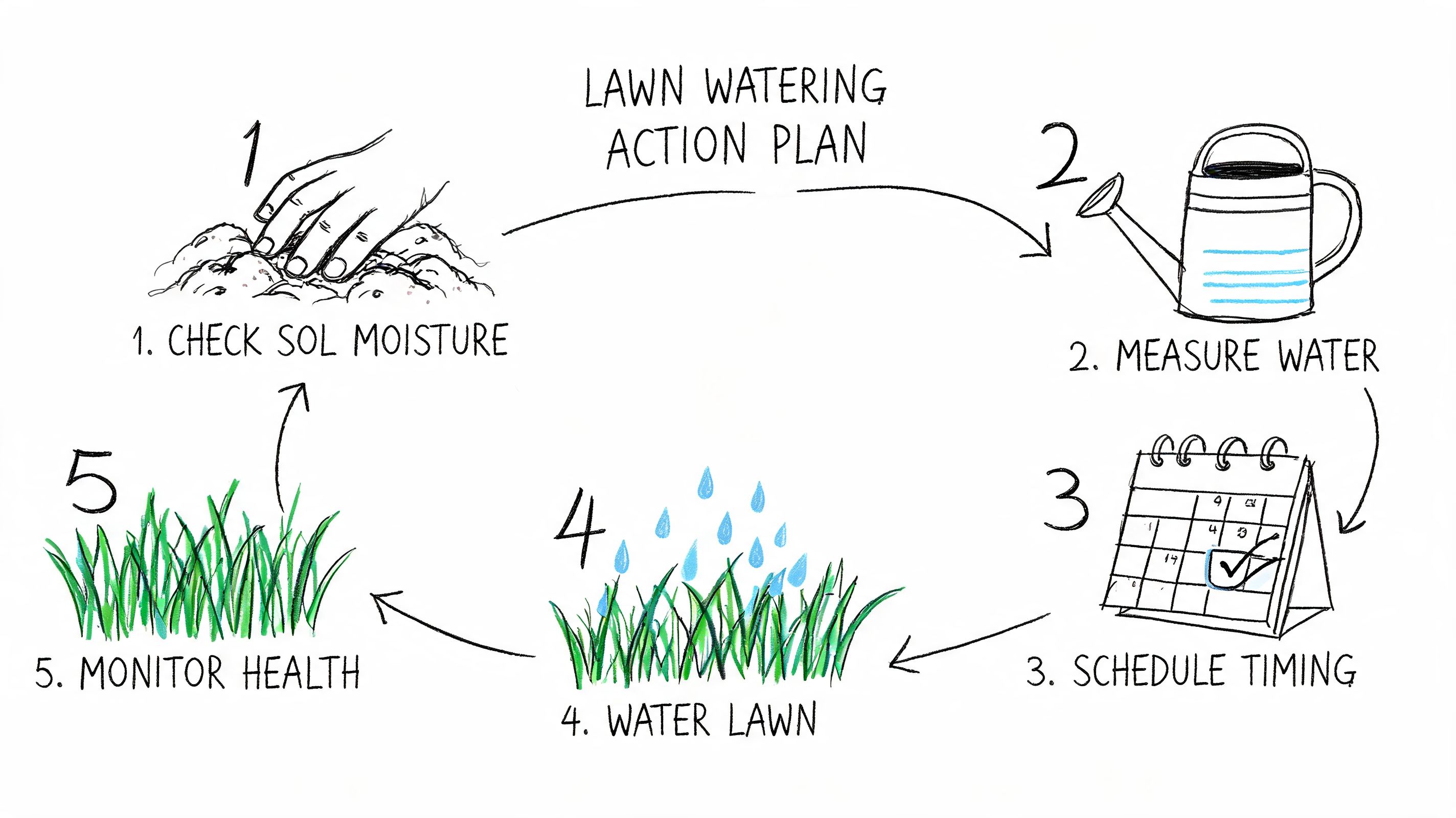
The five-step loop
-
Set your weekly target
Start with 1 to 1.5 inches of water per week including rainfall. If you have cool-season grass, remember it usually needs more total water than warm-season grass. -
Measure your sprinkler output
Use the tuna can test so you know how long each zone takes to apply water. -
Water thoroughly, not constantly
Aim for moisture that gets down into the root zone. If your soil can’t absorb a long run without runoff, split the watering into shorter cycles. -
Watch the lawn, not just the timer
Lingering footprints and dull color usually mean the lawn is asking for water. Spongy ground and constant wetness usually mean you’re overdoing it. -
Adjust for rain, soil, and season
Don’t keep the same schedule all year. And don’t ignore your soil type. Clay, loam, and sand all handle water differently.
Here’s the bottom line. The best answer to how often to water grass is rarely a fixed number of days. It’s a process. Measure, observe, adjust, repeat. That’s how you get a greener lawn without wasting water.